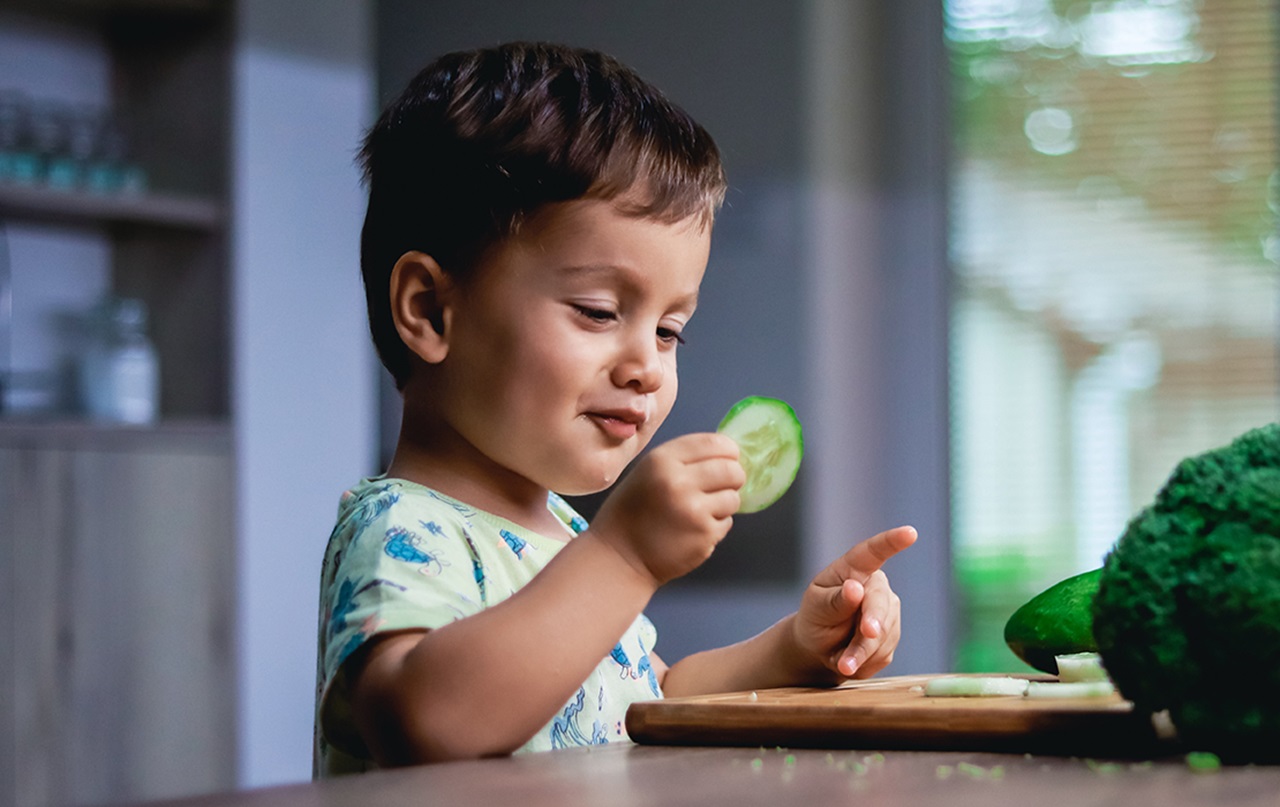
Children need strong, healthy teeth to chew their food, speak and have a confident smile. A balanced diet low in added sugars contributes to healthy growth and development of their dental and overall health.
Children’s teeth are at risk of cavities. Even healthy foods, including milk or vegetables, have some type of natural sugar, which can contribute to tooth decay. To help control the amount of sugar your child consumes, read food labels and choose foods and beverages that are low in added sugars. Also, select beverages, such as water or plain milk, that hydrate and contribute to good nutrition.
What your child should eat
According to the U.S. Department of Agriculture’s Dietary Guidelines for Americans, 2025–2030 (PDF), a balanced diet includes:
- Protein. Give your child a variety of foods from animal sources (eggs, poultry, seafood and red meat) and plant sources (beans, peas, lentils, legumes, nuts, seeds and soy).
- Fruits and vegetables. Your child should eat these throughout the day.
- Dairy. Choose offerings with no added sugars like plain milk and yogurt.
- Whole grains. Focus on ones that are rich in fiber like oatmeal, whole wheat bread and brown rice.
How much your child should eat depends on their age, health history and stage of development. Take a closer look at the guidelines or talk to your pediatrician about serving sizes and when to introduce foods.
In addition to a nutritious diet, your child’s dental health is also impacted by snacking habits, bottles and pacifiers. Here are some tips to keep your child's mouth healthy:
- Place only formula, plain milk or breast milk in bottles. The Dietary Guidelines for Americans recommend breast milk or infant formula with no added sugar as the main source of nutrition for your infant up to 12 months of age.
- Juice, even 100 percent juice, can be high in sugar. For that reason, several health organizations recommend that juice be avoided for the first year.
- According to pediatric guidelines, children ages 1–3 should have no more than 4oz. of juice each day; children ages 4–6 should be limited to 4–6oz.; and children ages 7–18 should drink no more than 8oz.
- Beverages with added sugar should be avoided from birth until age 11 years, according to the Dietary Guidelines for Americans, after which they should be limited.
- Infants should finish their bedtime and naptime bottles before going to bed.
- If your child uses a pacifier, provide one that is clean—never dip it in sugar or honey, or put it in your mouth before giving it to the child.
- Encourage children to drink from a cup by their first birthday and discourage frequent or prolonged use of sippy cups.
- Serve nutritious snacks low in added sugars and limit sweets to mealtimes.
For tips on how to get your children to eat more fruits and vegetables, visit the Academy of Nutrition and Dietetics.
Last updated January 2026